Germany is set to become climate-neutral by 2045. For Thyssengas, one thing is certain: hydrogen and other green gases are key technologies on this journey. In October 2024, the Federal Network Agency approved the core hydrogen network, thereby officially giving the green light for the development of a nationwide H2 infrastructure.
Following intensive planning work, one of the pioneering projects for the future of energy is now being realised: by 2027, the approximately 53-kilometre-long natural gas pipeline system from Vlieghuis to Ochtrup is to be converted for hydrogen transport. The pipeline project will thus connect the emerging nationwide H2 network to the province of Zeeland and the key import ports of Amsterdam, Eemshaven and Rotterdam.
“The Germany-wide transport infrastructure for hydrogen is on its way, and as a transmission system operator, we at Thyssengas bear a central responsibility for helping to build it,” emphasises Dr Thomas Becker, Commercial Director at Thyssengas. “We will eventually deliver hydrogen to where it is needed – to industry, power stations and distribution network operators. And not just for customers directly on the core network, but also in the regions connected to it.”
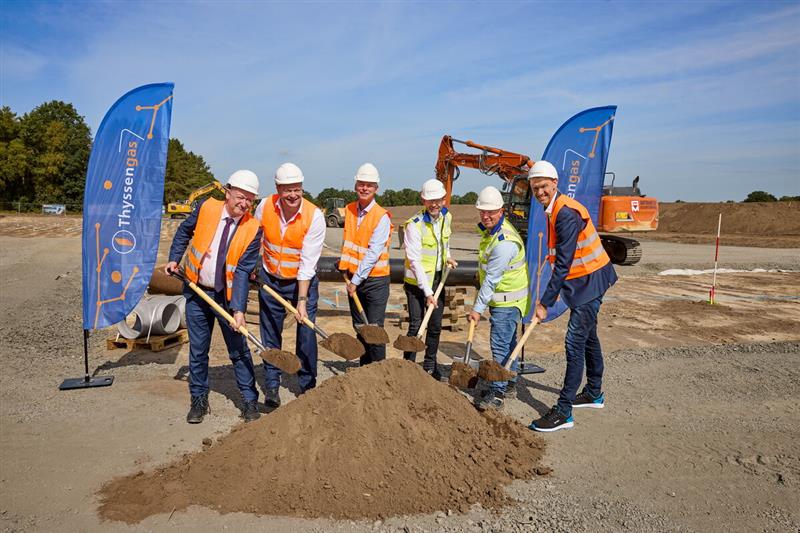
Ensuring safety plays a crucial role in this. At the ground-breaking ceremony, attendees learnt about the multi-stage safety procedures and 24/7 monitoring that play a central role in the transition to hydrogen-based operations. Protecting the environment and nature is also of great importance. Participants were able to gain first impressions of the construction site during a joint tour.
In a welcoming address at the ground-breaking ceremony, Member of the Bundestag Albert Stegemann emphasised: “I am delighted that here in Hoogstede we are not just talking about the distant goals of the energy transition, but are putting them into practice. The connection to the core hydrogen network opens up great opportunities for our entire region: we have an ideal geographical location, the local infrastructure and businesses that can benefit from it. Thanks to the active involvement of our local construction firms, the first signs of added value are already emerging – that’s brilliant.”
As a transmission system operator, Thyssengas is actively contributing to the energy transition in Germany. The Vlieghuis-Ochtrup conversion project is a pioneering initiative and a further step towards a climate-neutral energy supply.
About Thyssengas
Thyssengas GmbH is a German transmission system operator. The company, which celebrated its 100th anniversary in 2021, is headquartered in Dortmund. Thyssengas operates a gas network spanning around 4,400 kilometres – mostly in North Rhine-Westphalia, but with individual pipelines also in Lower Saxony. This network supplies downstream distribution network operators as well as industrial plants and power stations. Thyssengas is focusing on hydrogen as a gaseous energy carrier for a climate-neutral future. The Dortmund-based network operator is involved in numerous initiatives to this end. At the same time, it is making targeted investments in the conversion of its pipeline system to enable a rapid ramp-up of hydrogen as part of the energy transition. The company currently employs around 550 staff across seven sites in its network area, and this figure is rising.